Short answer: For Edmonton-area agents, a real estate farming workflow connects five decisions: who you want to serve, where the relevant homes are, what the market is doing now, what you should send and how you’ll keep showing up. The client informs the area. The area informs the campaign. The campaign needs to reach the right people with something worth reading.
Reviewed by Tom Shearer, Broker/Owner
Updated: October 2026 · Last verified: October 14, 2026
A neighbourhood can look great on paper. That doesn’t mean anyone there has heard of you.
During a farming session with our partners at PostNow, I started seeing how the pieces we were working on could connect. That’s when I thought I could bring everything together. Tom had already started the client-persona work, the exercise we now call Client by Design. I was looking at how to tie that thinking to sales history, the homes that exist in an area and, eventually, a campaign that reaches someone’s mailbox.
My first post in this farming series explains how that became NACA, Noralta Agent Community Analytics. The next one explains why total sales and turnover rate belong in the same conversation.
This is what happens after the analysis.
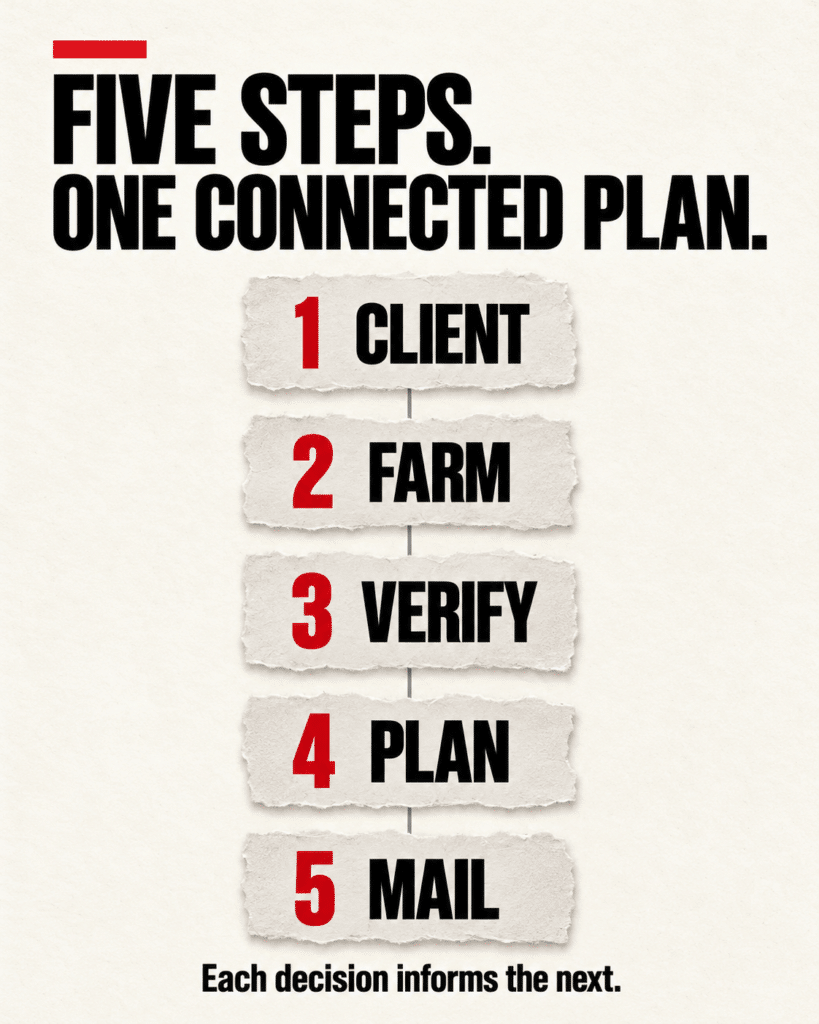
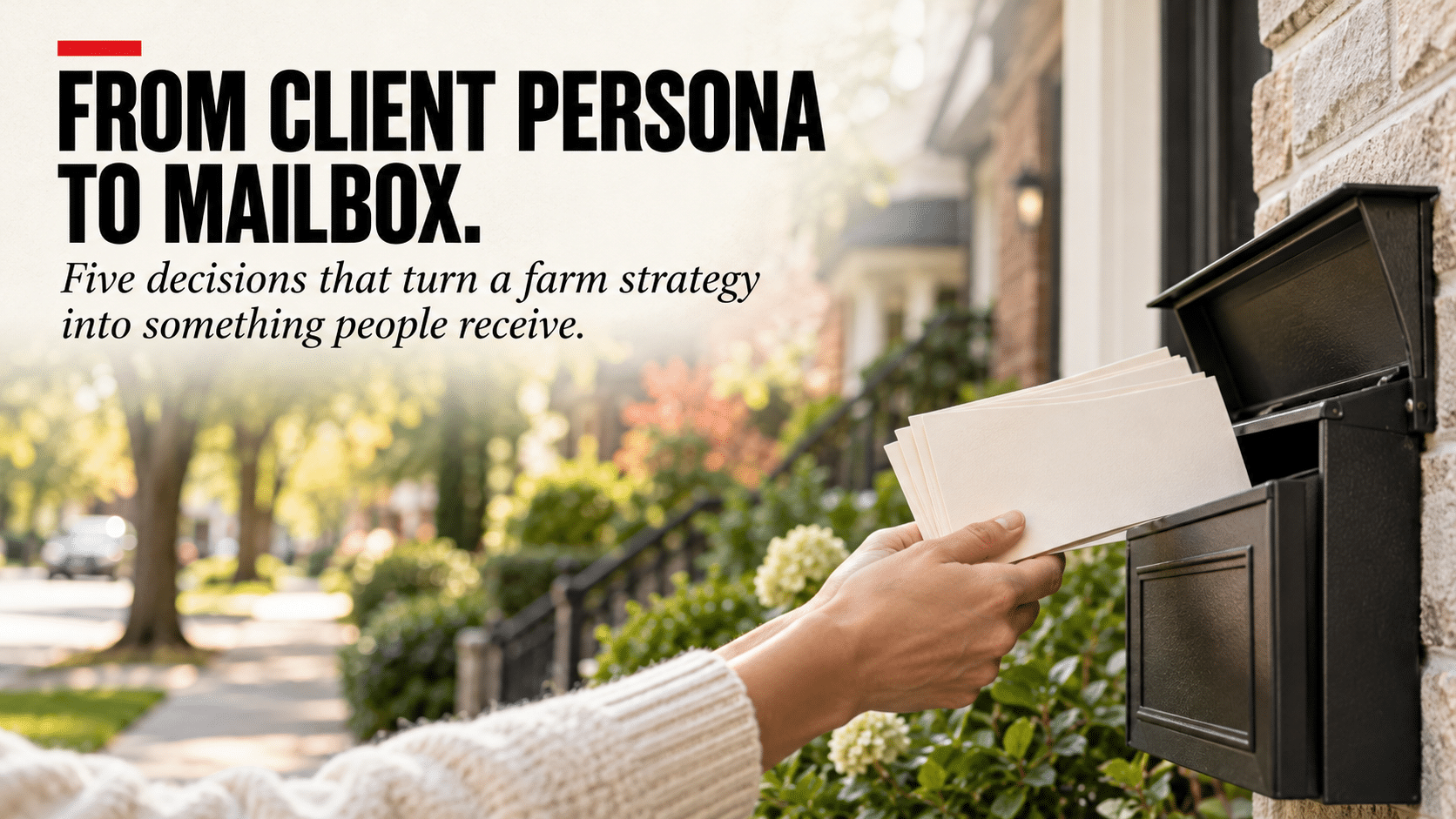
Five steps from persona to mailbox
Here’s the real estate farming workflow we’re connecting at Noralta:
- Client persona. Decide who you want to serve and what matters to them.
- Farm selection. Compare areas with the housing, pricing and activity that fit that client.
- Current market check. Verify current listings, recent sales and pricing in Paragon.
- Campaign plan. Decide who receives the message, what it’s about, which format fits and what you can sustain.
- Mail execution. Coordinate the artwork, audience and delivery so the plan becomes something people receive.
Five steps on their own don’t add much. The value is in carrying the reason for each decision into the next one.
The person comes before the postal code
Tom’s article about ideal clients starts with a simple question: who do you want to work with?
Then we can ask where homes that fit that client’s needs already exist. NACA helps identify candidate areas by looking at housing stock and sales activity together. As we covered in the last article, total sales and turnover tell different parts of that story.
But there’s a distinction worth keeping in view when the campaign begins.
Say your ideal client is looking for a lower-maintenance home. The area you select may contain the homes that person wants to buy. The people receiving your farming mail are the people who own those homes now. They aren’t necessarily your original client persona.
That’s why the campaign can’t be a paragraph about the buyer copied onto a postcard for a homeowner. The selection strategy and the message have to connect, but you still need to speak to the person opening the mail.
Check the moment before committing
Longer-term data helps you compare areas. It doesn’t tell you everything about what is happening there today.
Before committing a campaign budget, an agent should check current listings, recent sales and pricing in Paragon, alongside the longer-term information used to shortlist the area.
This isn’t about distrusting the analysis. Longer-term data helps you choose the area. Current data helps you understand the moment you’re stepping into.
A ranked neighbourhood isn’t a campaign. It’s a starting point for one.
Build a campaign, not another document
Now the decisions become practical. Who should hear from you? What do those homeowners care about? What can you say that’s useful to them? How often does it make sense to mail, and what can your budget support?
The Paragon Farming & Mailer Copilot (built using Gemini Notebook) on the Noralta Hub helps agents work through Paragon tasks, explore farm areas and understand the steps involved in Canada Post targeting and mailer campaigns. It’s guidance for doing the work, not a machine that chooses your farm or sends the marketing for you.
And the message still needs a human decision. A beautifully designed postcard that says nothing relevant to the recipient is still a missed opportunity.
Getting it into a real mailbox
This is where direct mail comes in, and where our partnership with PostNow and the Agent Success Studio becomes part of the chain. The Studio coordinates the campaign details and design handoff. PostNow handles the printing and mailing.
We have more than one way to use that partnership, and they’re not interchangeable.
Postcards can be used for neighbourhood farming, Just Listed and Just Sold campaigns, or other targeted local messages. They help an agent reach an area or audience they want to become better known to.
Personalized newsletters are a different relationship tool. Our Noralta group program sends a Noralta-branded newsletter under the agent’s name to people in their existing database, combining shared content with the agent’s own message and market focus.
One is often about introducing yourself to more of the right homeowners. The other helps you stay connected with people who already know you. Both need a reason to land in the mailbox.
One mailing is an event. Geographic farming is a pattern.
That doesn’t mean sending something just because the calendar says it’s time. Consistency without relevance is just repetition. The goal is a message that fits the recipient, delivered through a plan an agent can sustain.
The same thinking applies in Edmonton, Sherwood Park, Spruce Grove and Fort Saskatchewan. The audience, format and distribution method may be different.
Why the whole chain matters
Each piece has value on its own. A client persona can clarify who you want to work with. Market data helps you compare areas. A good mail piece can start a conversation.
But the connection is where I think this gets useful.
A client informs the farm. The farm informs the audience. The audience informs the message. Then the message has to make it off the screen and into the real world.
At Noralta, that’s part of what we mean by Noralta by Design. It starts even earlier than this workflow, with the kind of business you want and how you naturally prefer to work. The tools support those decisions rather than making them for you.
We don’t need more tools. We need the ones we have to connect, each link informing the next.
Where to go from here
Once you’ve decided to mail, there’s another choice to make: reach an entire neighbourhood mail route, or focus on a more specific set of addresses?
Those approaches serve different purposes and come with different costs and constraints.
Next in the series: Neighbourhood Mail vs. Postal Code Targeting: Which Fits Your Farm?
Frequently Asked Questions
What is a real estate farming workflow?
It’s the connected process of deciding who you want to serve, choosing a potential farm area, checking current market activity, planning a relevant campaign and carrying it through to delivery. Each decision should inform the next.
Does choosing the right neighbourhood guarantee farming results?
No. A well-chosen area is a starting point. Building relationships still takes relevant communication, consistency, agent judgment and time. No farm area or mailing guarantees business.
Why check current market activity before a farming campaign?
Longer-term sales and housing-stock patterns help compare potential areas. Current listings, recent sales and pricing in Paragon help an agent understand what’s happening now before committing to a campaign.
How often should I mail a farming area?
There is no universal schedule. Choose a cadence that suits the people you’re trying to reach, the message, the format and the budget. Sending something useful consistently matters more than mailing because a date is on the calendar.
What’s the difference between farming postcards and personalized newsletters?
Farming postcards can help agents introduce themselves or share relevant messages in a selected area. Noralta’s personalized newsletter program goes out under the agent’s name to their existing database and helps maintain relationships with people who already know the agent. They serve different audiences and purposes.
What is Noralta by Design?
Noralta by Design is Royal LePage Noralta’s connected approach to building an agent’s business, beginning with how the agent wants to work, who they want to serve, where to focus and how to follow through. Its tools support human decisions rather than make them automatically.