
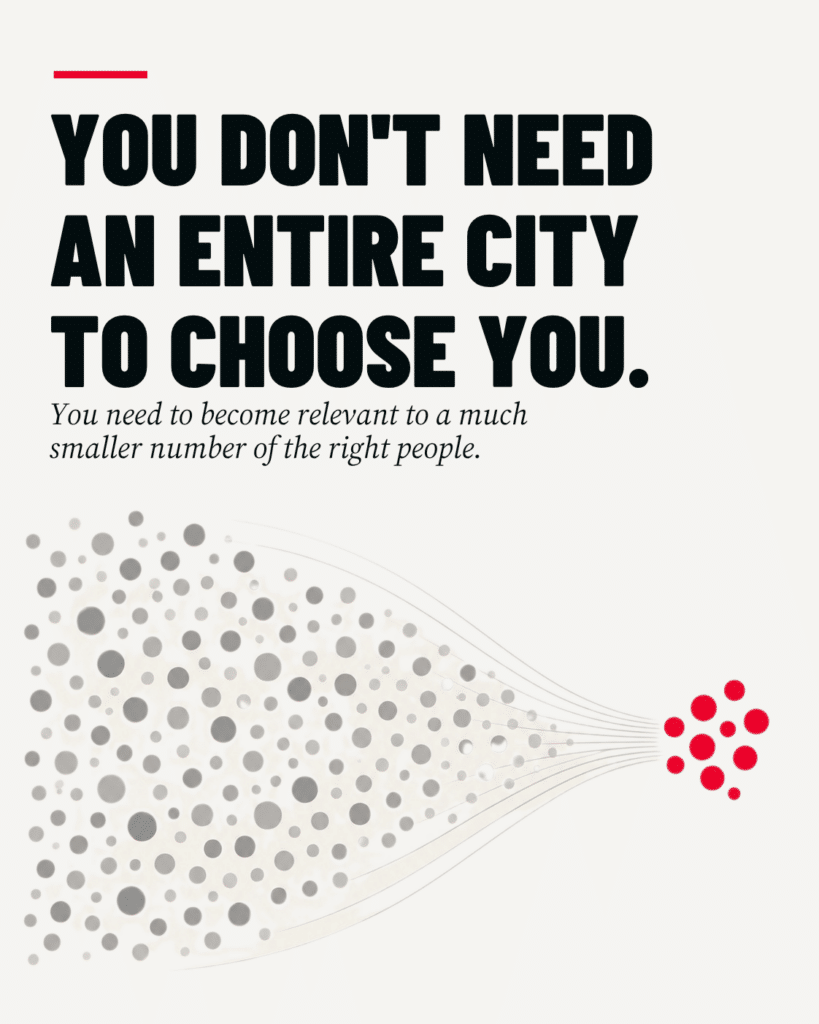
You don’t need everyone in the market to choose you. You need to get much clearer about the people you want to serve.
Reviewed by Diana McGee, Agent Success Team Leader Updated: October 2026 · Last verified: October 10, 2026 ·
In the last couple of articles in this series, I’ve worked through two questions I think matter when designing a real estate career.
First: What kind of career and life are you actually trying to build?
Then: What way of building business fits how you naturally work?
There’s a third question that follows pretty naturally:
Who do you actually want to work with?
Ask an agent who their ideal client is and it’s tempting to say, “Anyone who wants to buy or sell a home.”
I understand the instinct. Nobody wants to unnecessarily turn away business.
But defining an ideal client is really a decision about who you’re going to deliberately try to find. Not who you won’t serve.
You don’t need to market to an entire city
The idea really clicked for me through a couple of different presentations.
We once hosted a salesperson from a direct-mail company who took our agents through an exercise. They started by choosing an area and then worked backward to understand the kinds of people who actually lived there.
It reminded me of another presentation I’d seen around developing client personas: define the person you’re trying to speak to, understand the problems they’re facing and then think about how your service might help solve them.
It sounds obvious, but it exposed something interesting.
Real estate marketing often starts with the property.
Here’s a new listing.
Come to my open house.
Here’s what your home might be worth.
Here’s what just sold.
Those can all be useful messages. But they don’t necessarily answer another important question:
Why would this particular person want to work with me?
That’s a different way of thinking about marketing.
Instead of only advertising houses or asking for transactions, you’re communicating the service and experience you provide to a group of people you’re particularly well suited to help.
And you can afford to get fairly specific.
A typical individual agent isn’t trying to represent every real estate transaction in Edmonton and the surrounding communities. Building a very successful practice doesn’t require that.
Looking backward, I can see who my ideal client was
When I was actively selling, there was a fairly clear type of client I enjoyed working with.
I was in my 20s and 30s at the time, and many of my clients were at a similar stage of life.
They were often young professionals: nurses, engineers, lawyers, accountants and people in similar careers. They might have been single or a couple. Some had young children and others were planning to start a family.
Many were entering the real estate market.
What I find interesting looking backward is that I wasn’t necessarily just working with a first-time buyer.
I was often meeting someone at the beginning of their real estate path.
Their first purchase might be an entry-level home. As their career and family changed, they might move into what we used to call a junior executive home and eventually an executive home.
I also worked with older clients, often parents of people I knew or friends of my parents.
There was a pattern running through a lot of it: some form of connection, trust and the opportunity to build a relationship over time.
I can see that much more clearly now than I probably articulated it then.
And that’s part of the value of defining an ideal client. Sometimes the answer is already sitting in your past business.
You just haven’t named it yet.
Your ideal client is more than an age and a postal code
This is where I think a client persona can become either useful or fairly superficial.
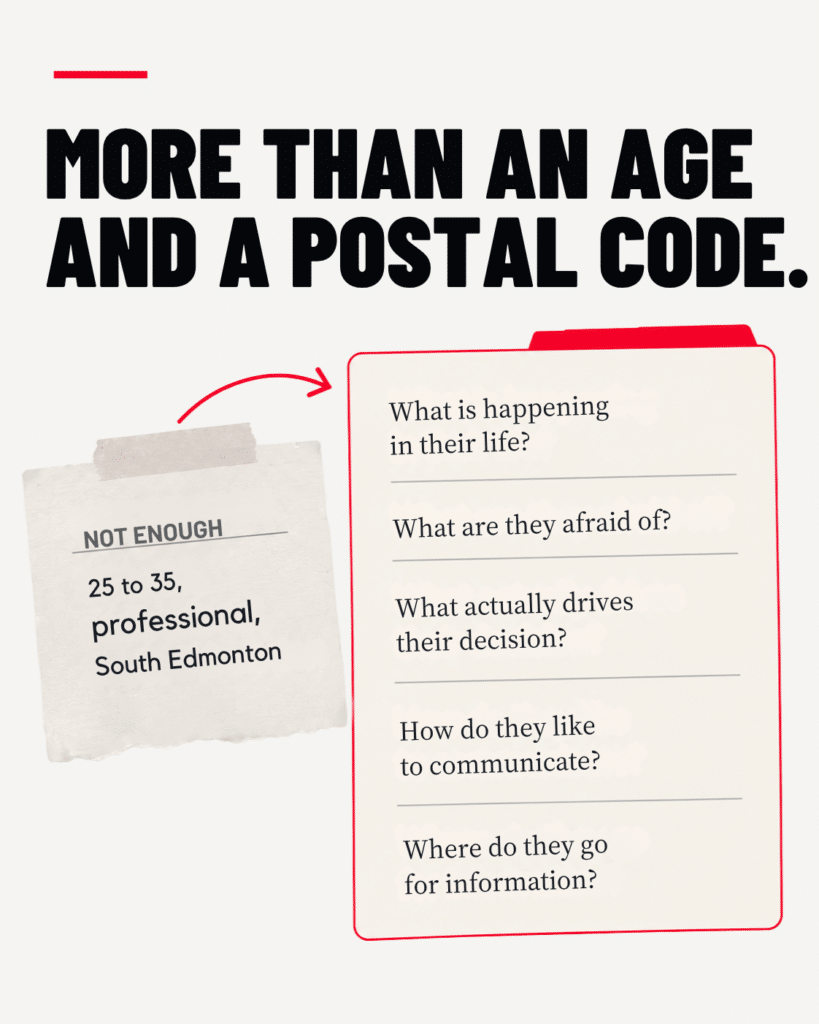
“25 to 35, professional, South Edmonton” isn’t enough.
Those details can help, but I want to know more.
What is happening in this person’s life?
What are they trying to accomplish?
What are they afraid of?
What actually drives their decision?
What might prevent them from choosing an agent?
How do they like to communicate?
Where do they go when they need information?
And what would make them believe that you understand their situation?
A first-time buyer, an investor and someone downsizing after 30 years in the same house could all be interested in the exact same condo.
But the transaction may mean something completely different to each of them.
That’s why Client by Design goes past demographics, to the person you’re actually trying to serve.
We built a tool to start that conversation
At Noralta, we’ve developed a short Client by Design survey to help agents work through this.
It starts fairly broadly.
What part of the market do you prefer working in?
What niche seems to fit you?
Maybe that’s South Edmonton and entry-level homes. Maybe it’s something completely different.
Then we start narrowing.
We ask agents to describe the clients they’ve most enjoyed working with and identify the types of clients who already tend to show up in their business.
We explore price range.
Then we go deeper.
What fears might this person have about buying or selling?
What’s actually driving their decision?
How do they want their agent to communicate with them?
Where might they find an agent in the first place?
What might stop them from choosing you?
And is there anything else about this person that we haven’t captured?
The tool uses those answers to develop three potential client personas for the agent to consider.
The result isn’t supposed to tell an agent, “These are the only people you can work with.”
Just like the Seven Success Styles in the previous article, it’s a starting point for a conversation.
Which of these people feels like someone you’d really enjoy serving?
Which one fits your strengths?
Which problems are you particularly good at helping solve?
And where could you realistically find more people like them?
The persona only matters if it changes what you do
This is where I think exercises like this can go wrong.
You can build a beautiful client persona, give the person a name, describe their job, age, family and favourite coffee shop, and then put the exercise in a drawer.
Nothing changes.
That’s not particularly useful.
The value comes when knowing your ideal client starts changing decisions.
Where should I spend my time?
Where should I spend my marketing dollars?
What should I talk about?
What should I become especially knowledgeable about?
Where should I prospect?
What questions should I be answering?
What kind of experience should I build for this client?
Now the persona starts becoming a business strategy.
Meet the client where they actually are
Suppose an agent decides they want to work with entry-level buyers.
The next step isn’t simply putting “First-Time Buyer Specialist” on a business card.
Go find them.
Where are these people actually spending their time?
Where are they searching for information?
What questions are they asking before they’re ready to talk with a REALTOR®?
What are they looking at when they’re beginning to think about buying?
It’s easy for those of us inside real estate to assume that everyone looking for a home starts in the same places we do.
They don’t necessarily.
A potential buyer might be browsing REALTOR.ca. But they might also be scrolling through properties or housing conversations on Facebook Marketplace or another platform. They may be watching videos about how much money they need to buy their first home. They may be searching for information about neighbourhoods, mortgages or whether buying even makes sense for them yet.
If you understand the person you’re trying to reach, you can start exploring where that person is before they become an obvious real estate lead.
That’s much more interesting to me than simply putting the same advertisement everywhere and hoping the right person sees it.
Your ideal client and your Success Style should start to connect
This is where the work from the last few articles starts coming together.
If teaching comes naturally to you and your ideal clients are first-time buyers, educational seminars might make a lot of sense.
If you’re highly relationship-driven and your ideal clients tend to come through professional networks, your strategy might be built much more heavily around introductions, community and staying connected.
If you naturally create strong digital content and the people you want to serve spend significant time researching online, that opens another path.
There isn’t one correct combination.
That’s the point.
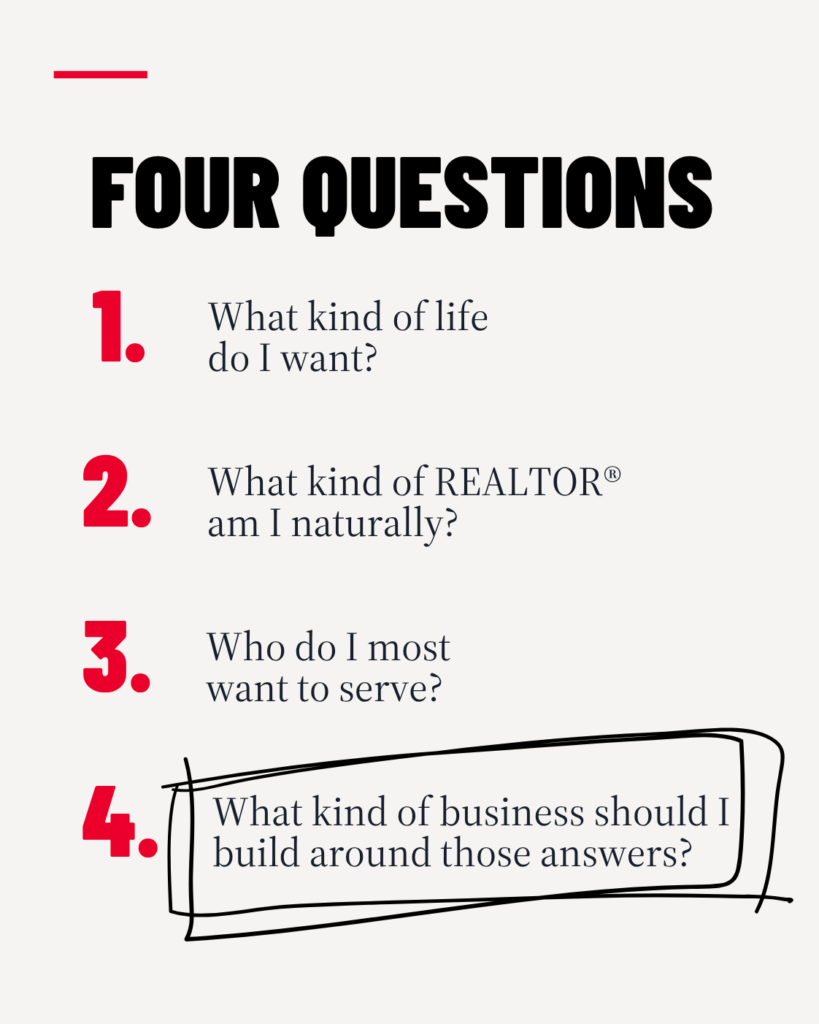
We’re gradually trying to answer four questions:
What kind of life do I want?
What kind of REALTOR® am I naturally?
Who do I most want to serve?
What kind of business should I build around those answers?
That’s very different from starting with:
I need more leads.
Specific doesn’t mean exclusive
I think agents sometimes resist defining an ideal client because it feels like they’re closing doors.
That’s not what I’m suggesting.
If you’ve built your business around helping young families move into their next home and a retired couple asks you to list their house, you don’t have to say no because they don’t match your persona.
Your ideal client isn’t an eligibility requirement.
It’s a direction.
It helps you decide who you’re deliberately trying to become relevant to.
And once you’ve made that decision, your marketing can become more specific.
Instead of:
Thinking about buying a home? Call me.
You can speak to an actual problem an actual person recognizes:
You’ve outgrown your first home, but you’re worried about buying the next one before you’ve sold the one you’re in.
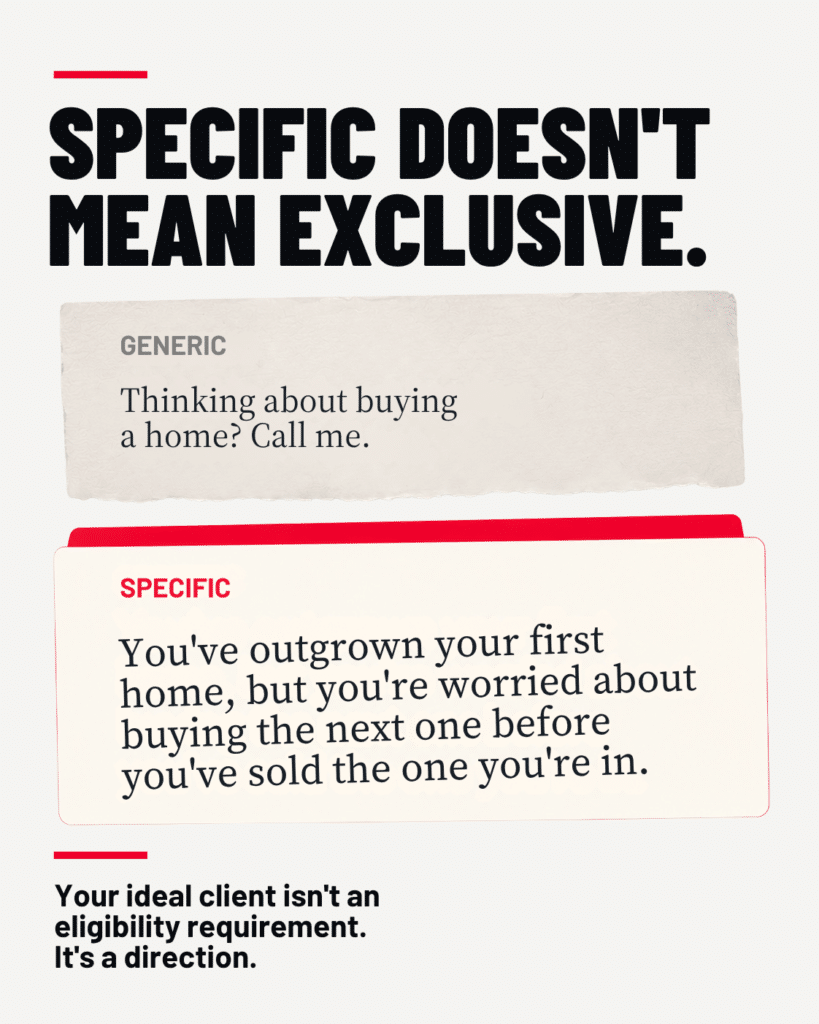
Now you’re showing that you understand the situation your potential client is actually in… which says a lot more than “I’m a REALTOR®.”
Start with the people you’ve already enjoyed serving
If you’ve never thought deliberately about your ideal client, I wouldn’t start by inventing one.
I’d start with your own business.
Look at the people you’ve worked with and ask:
Who did I really enjoy working with?
Then ask why.
What stage of life were they in?
What were they trying to accomplish?
What kind of help did they value from you?
How did they communicate?
How did they find you?
What did they trust you to do?
What did you particularly enjoy about helping them?
And would you like to work with more people like them?
You may start seeing patterns.
That’s the beginning of Client by Design.
You don’t need everyone
Real estate can make agents feel like every person is a potential lead.
Technically, maybe.
But that’s not a particularly useful way to design a business.
You don’t need to be the right REALTOR® for every person in Edmonton, Spruce Grove, Sherwood Park or Fort Saskatchewan.
What matters is that enough of the right people understand why you might be the right REALTOR® for them.
That requires some decisions.
Who do I enjoy serving?
What problems am I particularly good at helping solve?
Where do those people spend their time?
What matters to them?
And how can I speak to them in a way that sounds like me?
That’s what we’re trying to accomplish with Client by Design.
Don’t start by asking how you can market yourself to everyone.
Start by figuring out who you’d really like to have a conversation with.
Where to go from here
Once you have a clearer picture of who you’d like to serve, the next question gets practical. Where do those people actually live… and is there a part of Edmonton and area where you could become the obvious choice for them?
That’s where the next piece in this series picks up. We’ll look at how to choose a real estate farm in Edmonton using client personas and market data, so the people you want to serve and the neighbourhood you commit to actually line up.
If you’d like to work through your own ideal client in the meantime, start with Client by Design. If you’d rather talk through how it fits the business you’re building, book a conversation with Tom. You can also take the Brokerage Alignment Quiz to see how your goals line up with the support around you.
Frequently Asked Questions
How do I find my ideal client as a real estate agent?
Start with your own experience. Identify clients you’ve genuinely enjoyed working with and look for patterns: their life stage, type of transaction, concerns, communication style, how they found you and what they valued about working with you. Then consider whether you’d deliberately like to find more people with similar needs.
Does defining an ideal client mean I should turn away other business?
No. An ideal client gives direction to your prospecting, marketing and business development. It doesn’t have to determine who you’re willing to serve.
What’s the difference between a target market and a client persona?
A target market can describe a broader group, geography or segment. A useful client persona goes deeper by considering the person’s motivations, fears, decision-making, communication preferences and where they might look for information or professional help.
What is Client by Design?
Client by Design is an approach we use at Royal LePage Noralta to help agents think more deliberately about the people they’re best positioned to serve. Our survey explores an agent’s preferred market and niche, favourite clients, price range, client concerns and motivations, communication preferences, how those clients may find an agent and potential barriers to working together. It then provides potential personas to explore further.
How specific should my ideal real estate client be?
Specific enough that you can picture the person’s situation and make meaningful decisions about how to reach and serve them. “Homeowners in Edmonton” probably doesn’t tell you much. Understanding the life stage, problem, motivation and behaviour of the person you’re trying to reach gives you considerably more to work with.
Why does an ideal client matter to my real estate marketing?
It gives your marketing a person to speak to. Instead of repeatedly advertising that you sell real estate, you can address the questions, concerns and decisions facing the people you particularly want to serve.