

Quick Summary
Edmonton’s housing market in mid‑2025 remains sturdy and resilient. By June, the average sale price across all property types had climbed to approximately $465 000, up 5.9% year‑over‑year, even as sales dipped slightly from the prior month. Detached homes continue to lead the charge, averaging approximately $574,000, a 6.4% increase over the past year despite a small monthly pullback. Meanwhile, condominiums remain the most affordable at around $215,000, marking only a modest rise. Inventory is on the rise: new listings surpassed 4,200 in June, pushing total active inventory to nearly 6,800 homes, a healthy gain both monthly and annually. This influx has begun to shift leverage slightly toward buyers, particularly in the semi‑detached, townhouse, and condo segments, not yet a full market cool‑down, but the trend is clear.
Compared to the wider Alberta market, where the average home price reached about $528,000 in May, Edmonton remains very affordable. Benchmarks like the MLS® HPI composite saw impressive annual gains; the Edmonton benchmark rose nearly 7.7% year‑over‑year, underscoring the city’s stability and rooted demand. While price growth is solid, it’s considerably more moderate than in overheated markets like Toronto or Montreal. That restrained pace suggests Edmonton’s market is built more on fundamentals than speculation. And with new listings and inventory climbing, buyers are gaining valuable breathing room, even as sellers still hold some upper hand. The result? A well-balanced, sustainable market showing signs of subtler shifts rather than dramatic turns, a promising environment for measured growth moving forward.
What You’ll Learn Next
- Average home prices (updated monthly)
- Best schools nearby
- Commute times to downtown
- Family amenities
How much does a house cost in Edmonton?
As of June 2025, the average home sale price in Greater Edmonton stands at approximately $464,955, reflecting a healthy 5.9% year-over-year rise. The benchmark price, which better represents the “typical” home, clocks in at around $439,700, marking a stronger 7.7% annual increase. Detached homes continue to lead the market, with prices in that segment climbing around 6.4% year-over-year. Meanwhile, semi-detached, townhouses, and condos are showing respectable gains 4.1%, 6.7%, and around 1.5%, respectively, indicating broad-based strength across housing types.
Looking through a comparative lens, Edmonton remains at the more affordable end among Canada’s major city markets, thanks to its more modest price growth trends and sustained buyer demand. The fact that both average and benchmark prices are rising steadily, with benchmark growth outpacing averages suggests persistent underlying demand extending beyond high-end sales. While the market still tilts toward sellers given limited inventory, signs of moderation are emerging: new listings are rising, and certain property types are starting to experience lengthier time on market. This hints at gradually shifting conditions, offering more balanced opportunities for both buyers and sellers.
Current Trends in Edmonton’s Housing Market (2025)
Housing Price Comparison – June 2025
| City | Average Home Price | Year-over-Year Change |
|---|---|---|
| Edmonton | ~$464,955 | +5.9% |
| Toronto GTA |
~$1,101,691 (average) Benchmark: ~$995,100 |
-5.5% |
| Greater Vancouver |
~$1,173,100 (composite) Detached: ~$1,993,700 Condos: ~$748,400 |
-2.8% |
Edmonton remains Canada’s most affordable major city compared to Toronto and Vancouver, where home prices typically exceed $1.1 million.
Top Affordable Communities in Edmonton
Ottewell is one of Edmonton‘s oldest and most established areas, offering a blend of original post-war homes and updated renovations that provide excellent value. Its charm lies in its family-friendly atmosphere, active community league, and proximity to Capilano Mall and decent transit options, making it a prime pick for first-time buyers and savvy investors who appreciate character and community strength.
Mill Woods stands out for its affordability and comprehensive design. Developed in the 1970s with a focus on small-lot layouts and self-sufficiency, this large southeast community benefits from a town centre, shopping, recreation facilities, and easy access to the new Valley Line LRT, offering both practical amenities and excellent value.
en.wikipedia.org
Clareview combines Northeast Edmonton affordability with strong transit connectivity. With a mix of low-rise condos, apartments, duplexes, and townhomes, it delivers an accessible range of housing options. The nearby Clareview LRT station and park-and-ride facilities ensure swift access to downtown, educational institutions, and major destinations, making it highly appealing to commuters.
Sales Activity & Inventory Levels

Despite a slight cooling from record-breaking sales in 2024, Edmonton remains a seller’s market with only about 2.5 months of inventory available. This means homes continue selling quickly, typically within 1-2 months.
Edmonton’s Rental Market in 2025
Renting in Edmonton remains highly affordable, with average rents around $1,628 per month, noticeably cheaper compared to Calgary and other major Canadian cities. The city’s rental market continues to attract renters due to balanced housing supply and demand.
Average Rent Prices:
- 1-bedroom: approximately $1,300/month
- 2-bedroom: approximately $1,600/month
- 3-bedroom: approximately $1,988/month
Is It Worth Buying a House in Edmonton in 2025?
Absolutely. Edmonton presents excellent opportunities for both homeowners and investors, characterized by affordability, stable market fundamentals, economic diversification, and strong rental demand. With an average home price around $464 K in June 2025, Edmonton offers substantial savings compared to major Canadian cities like Toronto and Vancouver, where average prices frequently surpass $1.1 million. This affordability makes Edmonton especially attractive for first-time homebuyers and investors looking for solid returns.
Market Stability and Growth
Edmonton’s real estate market continues to demonstrate stability, supported by consistent year-over-year price appreciation (approximately 5.9% increase as of June 2025). The city’s ongoing infrastructure development, including transit expansions and commercial projects, further strengthens market appeal and property value potential.
Economic Diversification and Employment Opportunities
Edmonton‘s economy is diverse, not relying solely on the energy sector. Healthcare, technology, education, and logistics sectors are thriving, creating robust employment opportunities. This economic diversity not only fosters market resilience but also sustains steady demand for housing.
Strong Rental Demand
With steady population growth driven by internal migration and immigration, Edmonton‘s rental market remains robust. Investors can expect consistent rental income and relatively low vacancy rates, enhancing the attractiveness of owning rental properties.
Considering these factors, buying a house in Edmonton in 2025 is indeed a strategic decision, offering both immediate affordability and promising future growth.
Best Areas to Buy in Edmonton – Singles vs. Families
Best Areas to Buy in Edmonton – Singles & Young Professionals
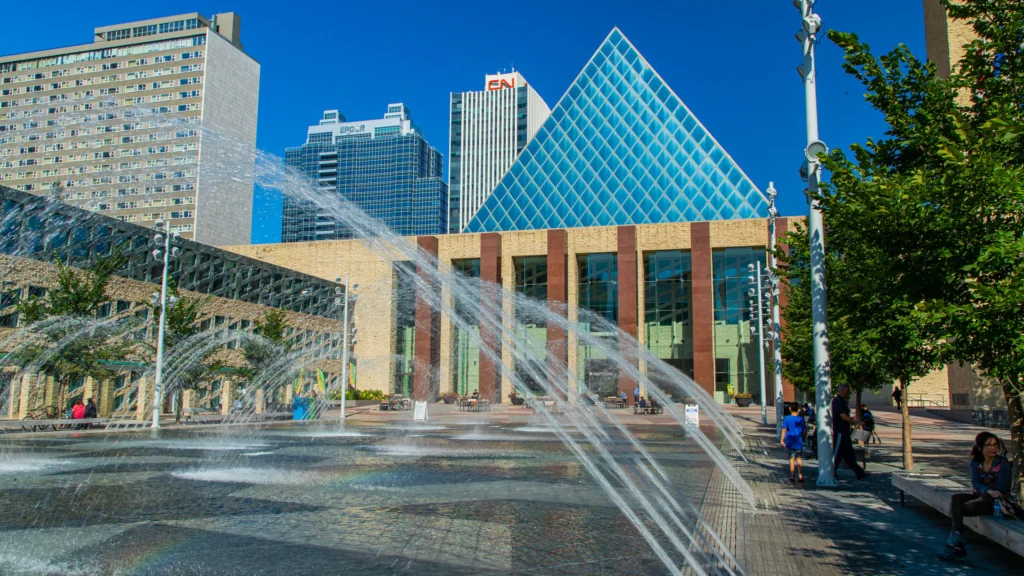
If you’re a single or young professional seeking walkable, lively neighbourhoods with great amenities and strong condo or rental markets, here are top picks:
Downtown Edmonton
- Median list price: approx $292,000 for condos (as of July 2025)
- Vibe: High-density urban core with entertainment, dining, bars, arts, and workplaces nearby.
- Rental average: 1‑bed units typically rent for $1,300–$1,800/month.
- Perfect for: Professionals looking for minimal commute and maximum convenience.
Oliver (now Wîhkwêntôwin)
- Density: One of Alberta’s densest neighbourhoods, with over 10,500 people/km².
- Housing mix: Predominantly high‑rise apartments and condos with many rental units.
- Rentals: 1‑bed units rent for around $1,400–$1,750/month.
- Highlights: On Jasper Avenue with revamped retail and dining, close to downtown, river valley access, and MacEwan University.
Strathcona (Old Strathcona / Queen Alexandra)
- Artistic & social vibe: Buzzing along Whyte Avenue with theatres, cafes, live music, and festivals like the Fringe.
- Rental average: Approximately $1,450–$1,700/month for 1‑bedroom apartments.
- Housing: Mix of low‑rise apartments, condos, and some older single-family homes.
- Ideal for: Creatives, students, and culture-seekers near the University of Alberta and close to the river valley.
Garneau
- Average property price: Around $435,000 (based on recent listings).
- Resident mix: Historic and high-rise condos with many student and academic renters.
- 1‑bed rent: Ranges from $1,400–$1,800/month.
- Why move here: Right beside the University of Alberta, offering a vibrant and intellectual vibe, with access to Whyte Avenue and river trails.
Westmount
- Historic charm: Tree‑lined streets, heritage homes, and boutique shops along 124 Street.
- Housing variety: A mix of apartments (54%) and single-family houses (42%).
- Rental average: $1,400–$1,800/month for 1‑bedroom units.
- Suitable for: Young professionals who want character, walkability, and proximity to downtown.
Best Neighbourhoods for Families in Edmonton
Edmonton is a great city for families—offering excellent schools, abundant parks and recreation, affordable housing, and safe, well-established communities. Below are some of the top neighbourhoods ideal for family living:
Summerside
- Community vibe: A Southeast Edmonton lake community with walking trails, beach access, and a central residents’ club.
- Price range: Condos from $250,000; single-family homes from $375,000 to $900,000.
- Why families love it: Access to private lake, safe streets, family events, and proximity to schools and shopping.
The Hamptons
- Community vibe: A peaceful, planned community in West Edmonton, designed with young families in mind.
- Price range: Townhomes and condos from $200,000; most homes range from $350,000 to $600,000.
- Why families love it: Excellent K–9 schools, nearby shopping, playgrounds, and walking trails.
Rutherford
- Community vibe: A quiet Southwest neighbourhood with parks, trails, and ponds, close to Highway 2.
- Price range: Condos from $150,000; single-family homes from $350,000 to $600,000.
- Why families love it: Affordable housing, great public and Catholic schools, and a strong sense of community.
Windermere
- Community vibe: An upscale, newer area in Southwest Edmonton known for luxury homes and modern amenities.
- Price range: Condos start around $170,000; single-family homes from $400,000 to over $1 million.
- Why families love it: Access to top-rated schools, shopping at Currents of Windermere, parks, and golf courses.
Terwillegar Towne
- Community vibe: Designed like a small town, with tree-lined streets, playgrounds, and community events.
- Price range: Townhomes and duplexes from $250,000; single-family homes from $350,000 to $700,000.
- Why families love it: Walkable layout, strong school options, and one of Edmonton’s most family-oriented atmospheres.

Alberta’s Best Choice

Edmonton vs Calgary
Cost of Living: Edmonton vs. Calgary in 2025
Living costs in Edmonton remain around 10-15% lower compared to Calgary. A typical family of four saves approximately $390 per month in Edmonton versus Calgary, largely driven by lower housing expenses.
Edmonton vs. Calgary: Housing Prices & Market Insights
As of mid-2025, Edmonton remains significantly more affordable compared to Calgary, with average home prices around $460,000 versus Calgary’s $580,000. This affordability has drawn buyers priced out of Calgary’s market.
Looking for tool that Actually help you make a decision:
Frequently Asked Questions (FAQs)
- Are house prices dropping in Edmonton in 2025?
No, prices are still rising moderately. - How affordable is Edmonton compared to Calgary?
Edmonton is around 20-25% more affordable in terms of housing. - What’s the average home price in Edmonton in 2025?
Approximately $464,955 as of mid-2025. - Is Edmonton’s rental market stable?
Yes, it remains stable and affordable. - Best Edmonton neighbourhood for families?
Summerside and Windermere are popular. - Is Edmonton a good city for singles?
Yes, particularly Downtown, Oliver, and Strathcona.
Final Thoughts on Edmonton’s Housing Market 2025
Edmonton in 2025 continues to offer attractive opportunities for buyers, investors, and renters, thanks to balanced market conditions, strong fundamentals, and lower living costs. Whether you’re considering Edmonton versus Calgary, the city’s affordability and lifestyle options make it a prime choice.


