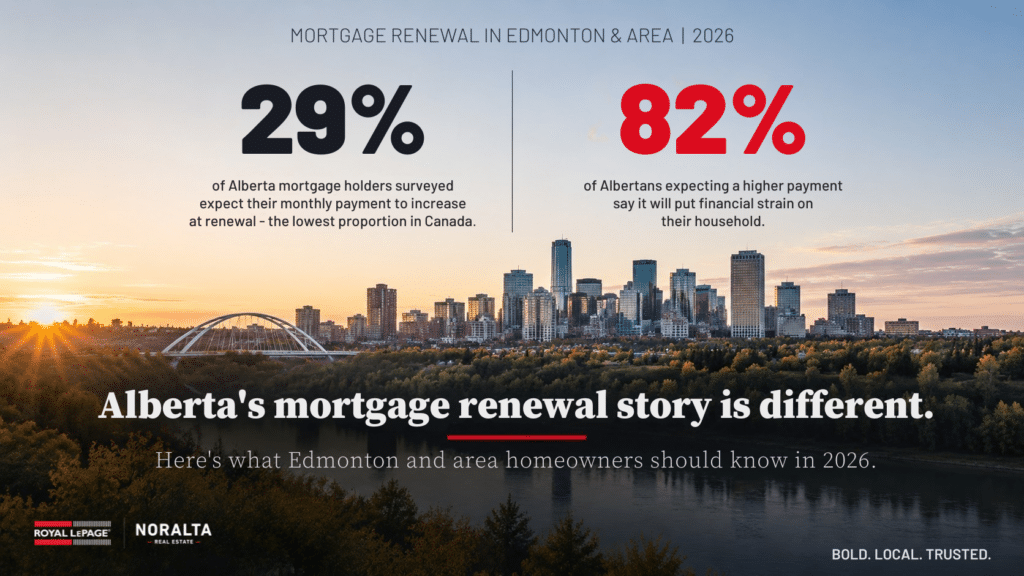

Short answer: In the Edmonton real estate market, the aggregate home price was $479,500 in Q3 2026, up 0.7% year over year and down 0.6% from Q2. Nationally, prices declined 0.8% year over year, although the quarterly decline was the same at 0.6%. Royal LePage’s revised forecast calls for Edmonton to finish Q4 2026 approximately 2.0% above Q4 2025.
What stands out to me about Edmonton’s third quarter isn’t how much prices moved. It’s how little they moved compared with several larger Canadian markets.
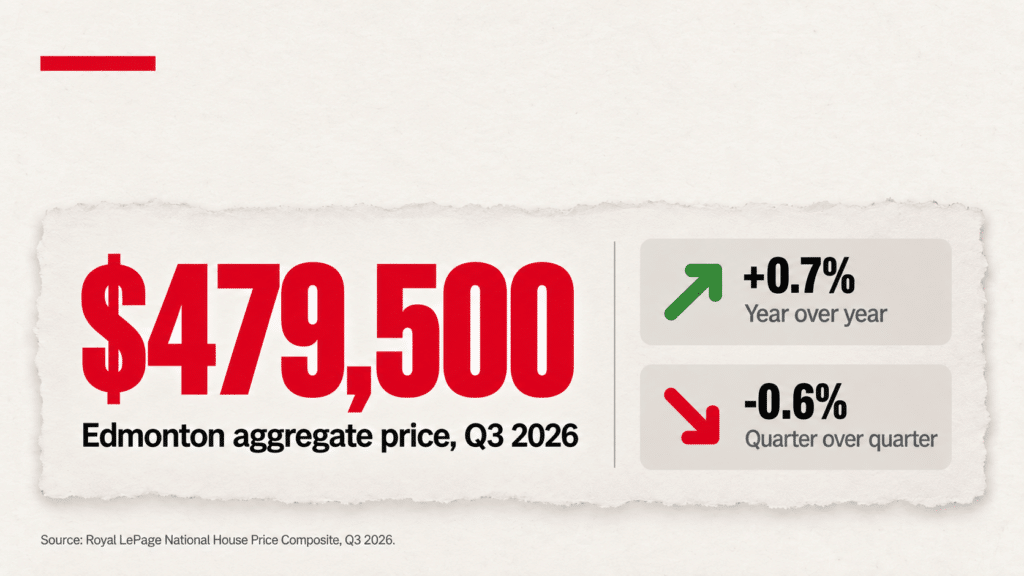
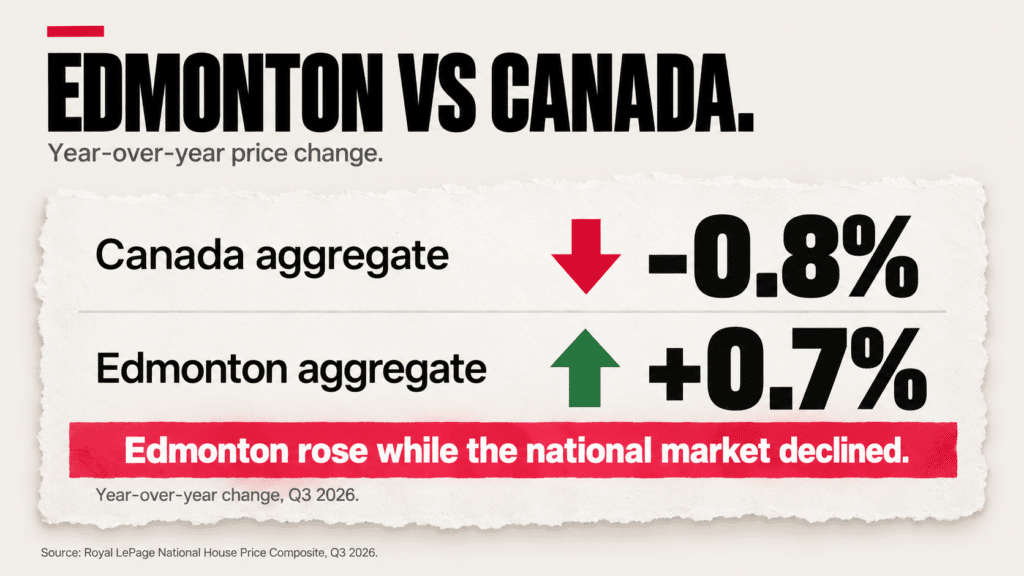
Edmonton’s aggregate home price reached $479,500, up 0.7% from a year ago and down 0.6% from the previous quarter. Nationally, the aggregate price declined 0.8% year over year to $810,000, though the quarterly dip was the same 0.6% we saw here. That’s a relatively steady result for Edmonton. It doesn’t mean every neighbourhood or property type is seeing the same market.
What the numbers say
Edmonton remains one of the most affordable major markets in the country. Edmonton’s aggregate home price is less than half the aggregate in Greater Toronto and Greater Vancouver, and both of those markets saw year-over-year declines of around 4%.
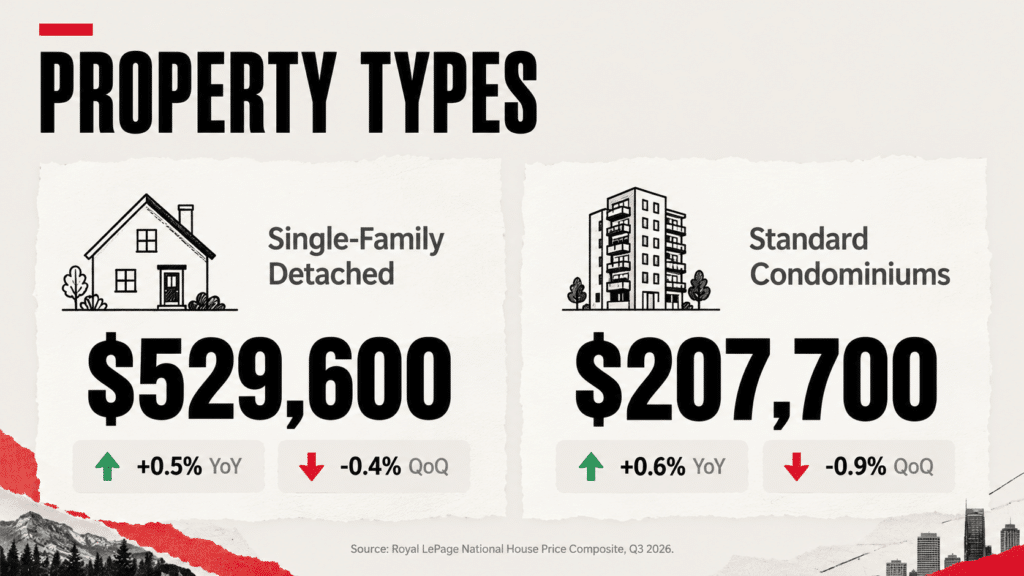
Broken out by property type, single-family detached homes had a median price of $529,600, up 0.5% from last year. Standard condominiums came in at $207,700, up 0.6%. Both eased slightly from the spring, with detached down 0.4% and condos down 0.9% quarter over quarter. Small annual gains, a small quarterly dip, no sharp moves in either direction.
Why the market softened this summer
We came into the summer with momentum, and it didn’t fully carry through the season. A few things pulled it back: slower in-migration, flooding in the region and a lower sense of urgency among buyers.
Inventory has grown compared to last year. Buyers aren’t overwhelmed with choice, but they have more of it, and that’s moved us toward a more balanced market. On the national side, the Bank of Canada has held its policy rate at 2.25% through its 2026 decisions so far. That has provided some stability in borrowing costs, although individual mortgage rates and borrowing circumstances still vary.
What it means if you’re buying or selling
If you’re buying, more inventory generally means more time and more selection than you’ve had in recent years. That’s real. But it isn’t universal. A well-priced home in a sought-after neighbourhood can still draw competition, so the pace you’ll face depends on where and what you’re looking for.
If you’re selling, pricing matters. Buyers have more properties to compare, and an ambitious asking price can make it harder to attract attention. The right strategy depends on the property, its competition and what buyers are doing in that specific part of Edmonton.
And if you’re just trying to make sense of it all, remember the national headlines and your local reality aren’t the same thing. Edmonton held relatively steady through a quarter that unsettled bigger markets.
What’s ahead
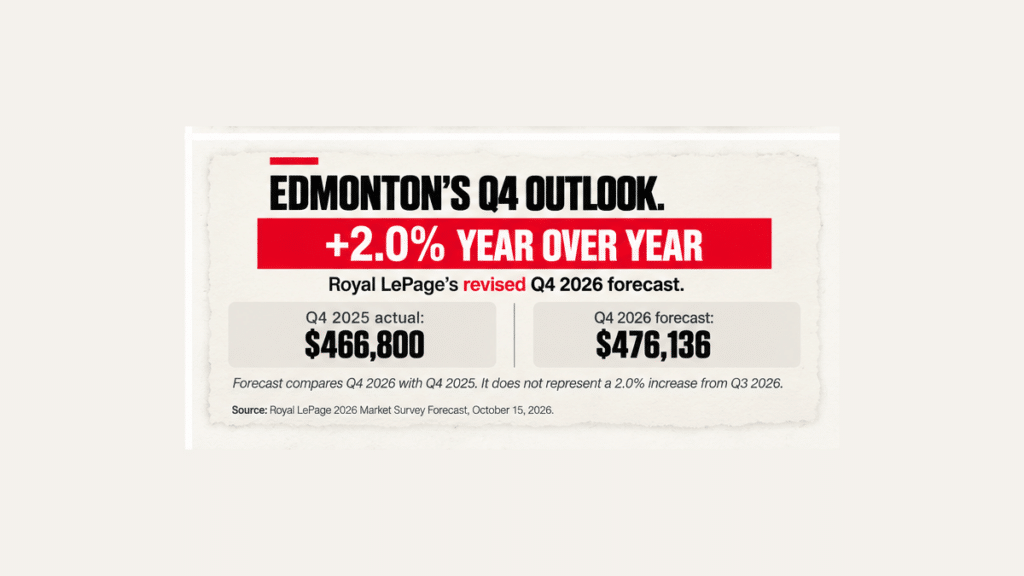
Royal LePage’s updated forecast calls for Edmonton’s aggregate home price to finish the fourth quarter 2.0% above the same quarter last year. That compares Q4 2026 with Q4 2025. It isn’t a 2.0% increase from today’s price. The forecast has also been revised downward from the earlier outlook.
I expect the market to keep moving toward balance, with more deliberate decisions from buyers and sellers. Looking further into 2027, employment growth and renewed migration could help support demand, and there are several major development projects that may contribute. Those conditions still need to materialize.
The bottom line
The Edmonton market has been relatively steady, but a citywide number only tells part of the story. What’s happening with detached homes in one neighbourhood may be quite different from what buyers are seeing with condos somewhere else.
If you’re thinking about buying or selling, start with the numbers that apply to your home, your neighbourhood and your plans. That’s where the most useful conversation begins.
Royal LePage Noralta serves buyers and sellers across Edmonton, Sherwood Park, Spruce Grove and Fort Saskatchewan.
Connect with a Royal LePage Noralta REALTOR®
Frequently Asked Questions
What’s the average home price in Edmonton right now?
Edmonton’s aggregate home price was $479,500 in Q3 2026, up 0.7% from Q3 2025 and down 0.6% from Q2 2026. The aggregate is a weighted measure of median prices across housing types. It isn’t the price of a typical home in every neighbourhood.
Are Edmonton home prices going up or down?
Both, depending on your timeframe. Prices are up 0.7% compared to last year, and down 0.6% compared to the spring. For most owners, the year-over-year figure is the more meaningful one.
Is now a good time to buy in Edmonton?
That depends on your situation, and it’s the kind of thing I’d rather talk through than answer in a sentence. Across the market, buyers generally have more inventory and more time than in recent years, and borrowing costs have been stable.
How does Edmonton compare to the rest of Canada?
We’re one of the most affordable major markets in the country, and we held up better than most this quarter. The national aggregate fell 0.8% year over year, while Edmonton rose 0.7%.
What’s the forecast for Edmonton?
Royal LePage forecasts Edmonton’s aggregate price will finish Q4 2026 about 2.0% above Q4 2025. That outlook was revised downward from the previous forecast.